
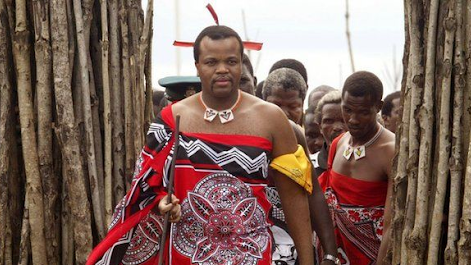
BACKGROUND OF THE SWATI CULTURE
The Swati people and the kingdom of Eswatini today are named after Mswati II, who became king Sobhuza and strategically defeated the British who occupied Eswatini. Eswatini was a region first occupied by San people, and the current Swazis migrated from northeast Africa through to Mozambique and eventually settled in Eswatini in the 15th century. Their royal lineage can be traced to a chief named Dlamini I; this is still the royal clan’s name. About three-quarters of the clan groups are Nguni, Sotho, Tsonga, and other Northeast African and San descendants. Swazi identity extends to all those with allegiance to the twin monarchs Ngwenyama, “the lion” (the king), and Indlovukati “, the She-Elephant” (the queen mother).
CONSOLIDATION OF THE SWATI NATION (1864-1899)
Thereafter during the leadership of Ngwane III, Swazis settled in present-day Swaziland. These Swazis first settled north of the Pongola River. The Ngwane Kingdom was thus established during the rule of Ngwane III from around 1745 until 1780. The early Swazi people emigrated from the Lubombo mountains, where Swazi rulers were established to the banks of the Pongola River. The leader, Ngwane III, established the Swazi settlements here near the Ndwandwe kingdom. Swazis were in constant conflict with their neighbours, the Ndwandwes.
The capital of Ngwane III was in southern Swaziland in Shiselweni at the foot of the mhlosheni mountains near Nhlangano and Mahamba. Swazis established a polity based on kingship accompanied by the Queen Mother and, during the minority of a crown Prince, a Queen Regent. Thus, when Ngwane died, Sayaka Ndwandwe became Queen Regent until Ndvungunye became the king. The kingship of Ndvungunye continued the order established by Ngwane III from 1780 until 1815, when he was killed by lightning. Ngwane IV succeeded him after the regency of queen Regent Lomvula Mndzebele. Ngwane IV was also known as Sobhuza I and Somhlolo, a revered king of Swaziland. Sobhuza continued to expand the territory of Swaziland.
COMMUNIST PARTY OF SWAZILAND
The party describes itself as democratic, anti-racist, and anti-racist; it aims to, among other things, give all political parties in Eswatini legal status, abolish the current absolute monarchy, establish a democratic system of government and the new constitution, ensure freedom of assembly and the press, allow for the safe return of exiles, and safeguard worker’s rights to organize and unionize. The party is active in the 2021 Eswatini protests.
EDUCATIONAL INSTITUTIONS
Several institutions provide technical, commercial, and vocational training. About four thousand students are enrolled at the University of Swaziland (UNISWA). Of course, the Swati have their university on their credit. Schooling was introduced as a part of missionary activity in precolonial times, and missionaries continued to influence the education system. the Swati nation set up schools as early as 1906, and several chiefs established what was known as ‘tribal Schooling’.
CROPS
Eswatini is the largest agro-industry cultivation of sugarcane and the manufacturer of sugar. Also of major commercial importance are the extensive man-made forests of pine and eucalyptus (in the highveld). A mixture of subsistence and commercial farming is practised in Eswatini. The staple crop is corn, and other crops include sorghum. Mainly for brewing traditional beer, Pumpkin, beans, peas, and other vegetables.
CONCLUSION
Eswatini is a developing country and is classified as a lower-middle-income economy. As a member of the Southern African Customs Union and the Common Market for Eastern and Southern Africa, its main local trading partner is South Africa, to ensure economic stability, Eswatini’s currency, the lilangeni, is pegged to the South African rand. Eswatini’s major overseas trading partners are the United States and the European Union. Its agricultural and manufacturing sectors provide most of the country’s employment. Eswatini is a member of the Southern African Development Community, the African Union, the Commonwealth of Nations, and the United Nations.
