
Introduction
The Ivorian education system is at the heart of the country’s development, but it faces a major challenge: better preparing young people for a constantly changing world of work. Academic success should no longer be measured solely by the number of degrees obtained, but also by the knowledge, practical skills, and abilities students develop. It is therefore necessary to consider an educational model that combines general education, practical training, digital learning, and exposure to different professions.
Moving Beyond Overloaded Curricula to Strengthen Foundational Learning
One of the challenges facing the education system is the growing number of subjects and the amount of content students are expected to absorb. When curricula become too demanding, students may prioritise memorisation for examinations rather than understanding and applying what they learn. The goal should not be to make students learn more content, but to help them master essential skills more effectively: reading, writing, calculating, reasoning, communicating, and understanding their environment. Science should help students understand phenomena, mathematics should enable them to solve problems, history and geography should help them better understand society, while digital skills should gradually become an important part of learning.
Bridging the Gap Between Theoretical Knowledge and Practical Skills
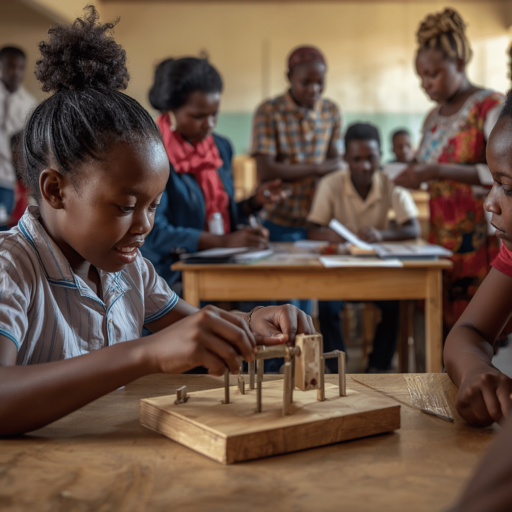
A major focus of educational reform should be reducing the distance between knowledge acquired in the classroom and its application in professional life. Knowledge and practical skills are complementary. From middle school onwards, students could have greater opportunities to discover different professions and engage in practical activities. Agriculture, crafts, electricity, mechanics, programming, robotics, digital professions, the arts, and entrepreneurship could gradually be introduced through career exploration and training programmes. The aim would not be to force children to choose a career prematurely, but to allow them to experiment with different activities and identify their abilities and interests.
Making Schools a Genuine Driver of Employment and Development
Reforming the education system should not focus solely on school curricula. It should also examine the capacity of schools to prepare young people for professional integration and contribute to national development, while ensuring that the state creates a favourable economic environment for investment and business financing. Introducing internships, workshops, laboratories, practical projects, entrepreneurship programmes, and digital training could help students develop skills that extend beyond the classroom. In rural areas, activities related to modern agriculture, local product processing, and environmental protection could bring education closer to local economic realities.
Conclusion
Reforming the Ivorian education system does not mean abandoning general education in favour of vocational training. It means creating a balance between knowledge, practical skills, civic values, and preparation for professional life. A school adapted to the twenty-first century should teach young people not only to think, but also to create, produce, undertake, innovate, and solve problems. This transformation requires well-trained teachers, appropriate equipment, coherent curricula, and regular evaluation of outcomes.

Comments are closed.