
Introduction
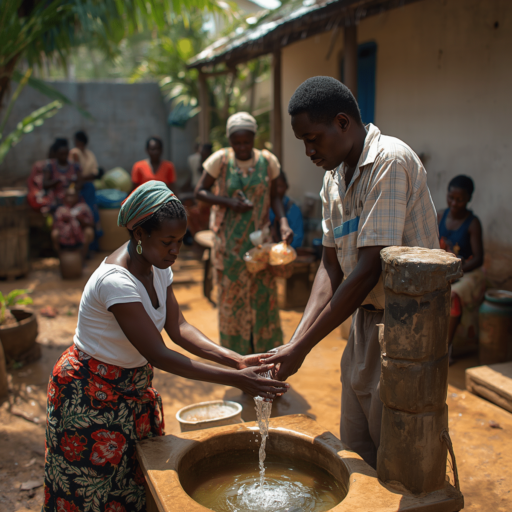
Water is essential to daily life: it is used to prepare meals, carry out household tasks, stay hydrated and maintain hygiene. This issue is part of Sustainable Development Goal 6 (SDG 6), which focuses on clean water and sanitation. Handwashing receives particular attention in this context.
Media Practices in Madagascar
In Madagascar, various media contents have been used to inform and mobilize children, adolescents and adults about the importance of washing their hands before meals, after recreational activities and after using the “kabone” (toilets). These contents include songs by artists released in 2010 and 2015. They highlight the importance of keeping hands clean through choreography and illustrations of everyday situations. These messages are also conveyed through short films. “Eva manasa tanana”, a series of educational animated short films produced by PSI Madagascar, was broadcast in 2016. In 2026, content published by UNICEF on Facebook on 14 April showed various everyday situations that could lead to contact with contaminated surfaces. These scenes serve as a reminder that handwashing should become a daily habit.
Local Handwashing Practices Observed
In 2010, a short film accompanying a song presented the different steps of handwashing, taught by a Japanese volunteer in Madagascar. The process involves wetting the hands up to the forearms, applying soap, and rubbing the fingers, nails, spaces between the fingers, palms, backs of the hands and forearms before rinsing them with clean water and allowing them to air-dry. In addition, bottles filled with water, fitted with pierced caps, along with soap, are made available in schools or near “kabone” (toilets). These devices were notably featured in the song. Today, taps are also used for handwashing. Practices can also adapt to different contexts. In 2020, during the COVID-19 pandemic, the use of hand sanitizers was added to the preventive measures promoted through the media.
Resource Mobilization
Handwashing is among the hygiene practices promoted through the Water, Sanitation and Hygiene (WASH) sector. This sector brings together various stakeholders, including the Ministry of Water, Sanitation and Hygiene, WaterAid Madagascar, the Ran’Eau Madagascar network, as well as other organizations, NGOs and projects that contribute, each according to their role, to strengthening hygiene practices.
Conclusion
Water is both a resource to be preserved and a key issue for hygiene. Songs, television and short films show that communication can help mobilize relevant stakeholders and encourage behavioural change. To achieve this, local realities must be taken into account.
Social Media: https://www.linkedin.com/in/zoely-rasolomampionona-07071226a

Comments are closed.