
Introduction
Awareness campaigns are widely used to address social and environmental challenges across Africa. They educate communities about issues such as waste disposal, public health, road safety, and education. However, knowing about a problem does not always lead to behavioral change. People may understand the risks but lack the resources, opportunities, or motivation to act differently. Effective communication must therefore go beyond sharing information. It should identify the barriers that prevent action and help people find practical alternatives. By combining awareness with accessible solutions, community participation and consistent follow-up, campaigns can move beyond temporary attention and contribute to meaningful, lasting change.
Knowing Is Not the Same as Doing
A message can reach thousands of people without changing their behavior. Someone may understand the dangers of improper waste disposal but continue dumping rubbish in public spaces. Another person may know the importance of regular health checks but delay seeking medical attention. This gap between knowledge and action is an important challenge in development communication. Awareness helps people recognize a problem, but recognition alone does not guarantee a different decision. Behavior is also shaped by personal circumstances, available resources, social expectations, and access to alternatives.
When Awareness Meets Practical Barriers
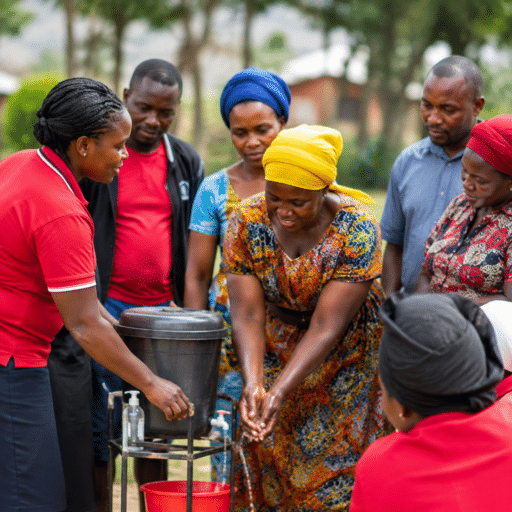
Consider a community where residents understand the importance of proper waste disposal. If collection services are unreliable and suitable disposal points are unavailable, many residents may struggle to change their habits. Repeated messages about cleanliness cannot solve the problem alone. Practical solutions must accompany communication. The same principle applies to education, public health and road safety. People need information, but they may also need affordable services, appropriate facilities, accessible support and opportunities to practice what they learn. Understanding these barriers helps campaign organizers develop messages that reflect people’s actual circumstances.
From Messages to Meaningful Action
Effective campaigns begin by identifying the behavior they seek to change. They then examine why the behavior occurs and what might make a different choice possible. Community participation is important in this process. Residents can help identify obstacles, suggest realistic solutions and determine which communication methods work best for them. Campaigns should also provide clear actions that people can take. Follow-up activities can reinforce those actions and help identify what is working. Evaluation matters too. Counting posters distributed, meetings held or social media views generated measures the reach of a campaign. It does not necessarily show whether behavior has changed.
Conclusion
Awareness remains an important part of social development, but it should not be mistaken for the final result. Meaningful change requires an understanding of the circumstances that shape people’s decisions. Across Africa, communication campaigns can become more effective when they combine clear information with practical solutions, community participation and consistent follow-up. The real measure of success is not simply how many people hear a message. It is whether people can act on it and whether their actions produce a meaningful difference. A campaign begins by informing people. Its greater purpose is to help make positive action possible.
Social Media: https://www.facebook.com/share/1Bas1oa5mU/?mibextid=wwXIfr

Comments are closed.