
Introduction
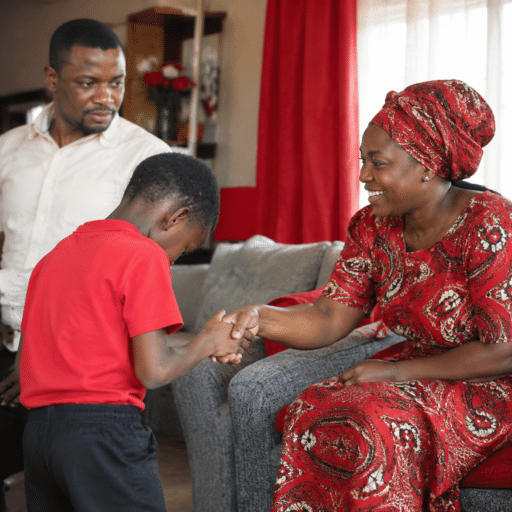
‘Greet your aunt first.’ ‘But I already greeted her yesterday.’ A sharp look follows .’ So, do you greet people only once?’ The child lowers their head and walks back to greet her. No lecture follows. No textbook is opened. Yet a lesson has been delivered; respect convenient.
This is how many African parents teach. Their lessons are often hidden in ordinary moments – in a raised eyebrow, a tired sigh, a slammed door, or the familiar warning: ‘When you have your own children, you will understand.’ In many African homes, silence is a classroom, and everyday life is the textbook.
Learning Respect and the Meaning of Family
From childhood, children learn that respect is a currency. You greet visitors before sitting down. You do not interrupt an elder. You do not call an older person by their first name. Sometimes, one look from a parent speaks louder than ten minutes of explanation. Without saying much, parents show that respect opens doors while disrespect can close them. Children also learn that family is bigger than the people sharing the same roof. A cousin can become a brother, an aunt can become a mother, and a neighbor can be treated like family. When visitors arrive unexpectedly, the food somehow stretches. One pot becomes two and two become four. The pot may be nearly empty, but generosity whispers,’ We shall manage ’; in this way, children learn that ‘Ubuntu ’-the belief that our humanity is connected to others-is not merely a word but a way of life. Hard work is another lesson written into the walls of the home. A mother rises before the sun. A father returns when darkness has already fallen; a shop opens early and closes late. There may be no motivational speech, yet the message is clear; dreams do not grow on trees. They must be watered with effort, patience, and persistence. African parents also teach resilience through their struggles; when money is scarce, they adjust. When plans collapse, they begin again. When tomorrow looks uncertain, someone says,’ God will provide,’ and life continues. The child learns that storms may bend the branches, but they do not have to uproot the tree.
Hard Work and Resilience
Then comes the powerful question:’ What will people say?’ Children learn that their behavior can bring either pride or shame to the family. This teaches responsibility, but it can also become a heavy stone around the neck when the children feel forced to live for society’s approval. Perhaps the deepest lesson is sacrifice. A parent may wear old clothes so a child can have new ones. Parents sometimes bury their own needs and dreams to water those of their children. African parents teach through their hands, struggles, sacrifices and silence. Their homes are unwritten books, and childhood is the first chapter. Sometimes, the loudest lessons are never spoken.
Conclusion
In the end, these lessons shape people who value dignity, resilience and community. Every shared meal, patient greeting, and sacrifice becomes an inheritance passed between generations. Long after warnings fade, examples remain: stand with your people, rise after hardship, honour your elders and give others opportunities to grow. That is the quiet legacy African parents leave.

Comments are closed.