
Introduction
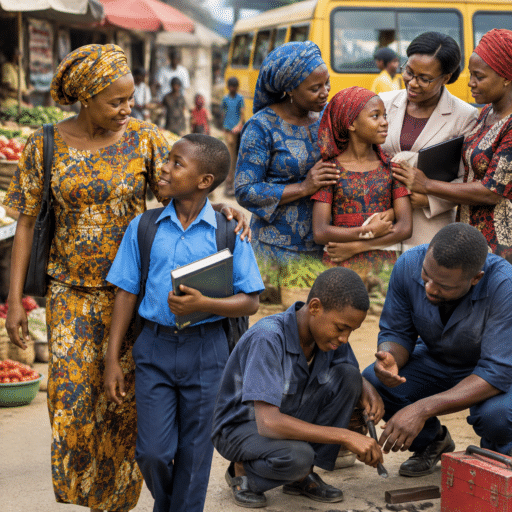
If you walk through markets in Yola, or any village in Jigawa, or any bus parks in Abuja and many parts of Nigeria, you’ll see a bunch of children who should have been in school roaming in the streets selling sachet water. Girls who are supposed to be safe at home are married off at 13 years old. Boys who should be learning business are being beaten by their master for just simply dropping a tool, and so they misbehave and become vulnerable.
According to NHRC, there are about 86,633 cases of child rights violations recorded from Jan 2024-2025.
It’s been said that “children are the leaders of tomorrow,” but many of them are just trying to survive in this cruel world.
The Problem
Nigeria’s insurgency and banditry can be rooted in neglected, abused, and abandoned children. Nigeria has a solid Child Rights Act of 2003 on paper. It defines a child as anyone under 18 and bans child marriage, child labour, and any form of abuse. But the law is simply not implemented and neglected across the country. The numbers are very concerning. UNICEF report says 6 out of 10 children face some form of violence before the age of 18, and lots of cases of trafficking, with many more cases never getting reported. Without strict laws and real enforcement, children will continue to be the easy target. They are trafficked across borders, pushed into street begging or into the spoiled almajiri system. Some are denied school so they can work in farms or other places of cheap labour, while others face violence at home with nowhere to turn.
The Consequences that will be Paid
It is imperative to understand that “A child belongs to everyone,” as the Hausa say (ɗa na kowane). When children are abused or neglected, they carry lasting trauma. A hungry, mistreated boy may join gangs or banditry seeking food, money, or revenge. Similarly, a girl forced into marriage at 14 may face poverty and health problems, perpetuating the cycle for her children. These problems contribute to insecurity and instability. We cannot build a stable country while neglecting vulnerable children. How we treat society’s poorest children affects everyone’s safety, prosperity, and future.
The Solutions
First and foremost, the lawmakers from both national and state levels should work tirelessly to ensure a solid and a very strict laws to safeguard children and their right. There be severe punishments for anyone who abandons a child deliberately.
Secondly, it’s also crucial to fund people who are doing the work, like social welfare officers, family unit police, and groups raising awareness.
Laws alone cannot solve the issue if culture is excusing it. Awareness should be done wide and far to the heterogeneous audience.
Conclusion
Lawmakers must recognise that their next bill can save lives by prioritising child safety and our future. We must not ignore children in danger or need assistance, and we must hold ourselves and our leaders accountable. Nigeria’s future depends on the 9-year-old girl selling oranges in traffic and the 12-year-old boy sleeping under a bridge. Protecting these vulnerable children is our collective responsibility towards a safer tomorrow.

Comments are closed.