
Introduction
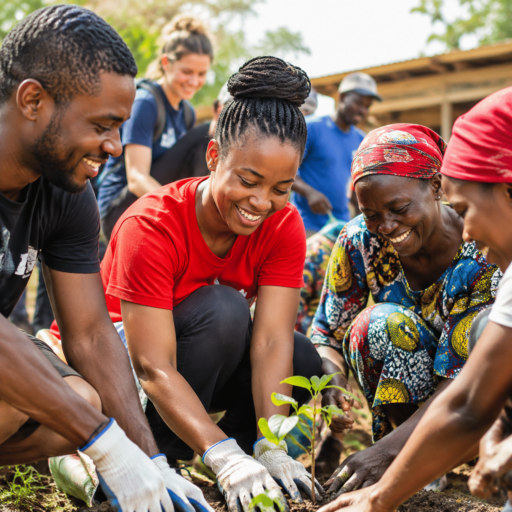
Volunteering works best as an exchange. On one hand, communities bring priorities, knowledge, and leadership to define what matters, understand the context, and guide the work. On the other hand, volunteers contribute time and skills to bring a new perspective. They add capacity while leaving with a deeper understanding of place and people. Hence, mutual respect turns “helping” into shared work. The starting point should be local priorities. The local community should propose what they need in the first place. Then, the role of local partners is introduced to make sure that work will keep moving forward. Finally, success is decided based on what sustains in the long run.
Volunteers Change through Listening and Doing
Volunteers are the ultimate fuel of the process. They change dramatically when listening and doing their tasks efficiently. When listening, they practice humility and adaptability. When practicing, they see how place and context shape the work. When done, they bring home relationships and learning, not only a story of “rescue”. Volunteering is not about creating a new system and demolishing the previous one. It is about strengthening what already works instead of creating a parallel system that might not work appropriately. Volunteers should support locally defined needs such as learning, health, livelihood, or the environment. Then, they should share useful capacity such as skills and resources to move through local teams.
Africa’s Volunteering includes more than Formal Placement
Both traditional and modern forms of volunteering contribute to peace and development. Formally, visible placements are easy to recognize. They appear in structured programs that make roles, timelines, and responsibilities easier to identify and report. They are counted more often. Informally, rooted community contribution is undervalued. Since it is deeply rooted in local cultures, informal work is often underreported and undervalued. Here, visibility is not value. The reported scale from the African Union and UN Volunteers sources is sustainable and still incomplete. Assignments estimated at 651,611 are reported annually across Africa. Volunteer hours exceeding 71 million hours are reported annually in Africa.
What will Last after the Volunteers leave?
This is the question that should be asked to measure the impact of volunteering and its sustainability. The community should define the success of volunteering based on its continuity. This should not be decided by volunteers based on their experience alone. Meanwhile, local partners should share in setting priorities and guiding decisions to guarantee the sustainability of volunteering work even after volunteers leave. Furthermore, responsibility for this sustainability should remain local to make sure that the local community will continue to support this work. Nevertheless, it should be understood that there is no one-size-fits-all solution that makes communities stick to the plan after volunteers leave. Therefore, powerful relationships should be built from day 1.
Conclusion
Volunteering is not just a mission implemented by individuals working in isolation to gain experience or achieve personal goals. It is a process of working in harmony to align with the goals of the local community served while maintaining their priorities. It is a mutual relationship between volunteers and local communities that benefits both parties equally.

Comments are closed.