
Introduction
Do you know that some pregnant women have experienced stillbirths, miscarriages, and lost their pregnancies because they had malaria? Some mothers have lost their babies and children to the cold hands of death because they were infected with malaria. In Nigeria alone, an estimated 97% of our population is at risk of malaria, and one of the proven interventions is the continuous use of insecticide-treated nets (ITNs) as the key intervention for malaria vector control.
Malaria Trends
Malaria cases are not always the same throughout the year, which means there are seasons and times of the year when malaria cases are on the increase, and here are some of the trends that this disease has followed over the years. Seasonal patterns in malaria are caused by the weather, especially during the rainy season, when mosquitoes breed and multiply rapidly. There is an established link between standing water, mosquito multiplication, and malaria. Climate change, such as flooding and excessive rain, might also affect mosquito numbers. Houses and environments that get flooded during certain times of the year have a higher tendency to become breeding grounds for mosquitoes. Refusal to sleep under mosquito nets, especially among pregnant women and young children (3-59 months) who live in mosquito-infested areas puts them at risk of malaria infection. Poor sanitation, dirty environments, and the practice of unhygienic habits can put individuals and families at risk of malaria.
Malaria Prevention
In a study conducted across African countries by the Geneva Learning Foundation, malaria cases decline through the introduction of preventive interventions such as Seasonal Malaria Chemoprevention (SMC), the use of ITNs, evacuation of wastewater, and regular community awareness on malaria prevention strategies. Sleeping under insecticide-impregnated bed nets is a core malaria prevention strategy that repels mosquitoes and hinders them from biting the body. Due to low economic status, cultural beliefs, and knowledge gaps, some people have refused to use ITNs. For others, they can find the nets disturbing because of the weather, allergic reactions, and discomfort. However, it is advisable to sleep under nets, especially during the rainy season. Reducing mosquito numbers through environmental interventions is an important vector control strategy. Control activities such as eliminating natural breeding sites, improving drainage, and removing garbage to prevent the build-up of stagnant water are essential. Malaria vaccines such as R21/Matrix-M, RTS, and S/ASO1 (Mosquirix) can be administered. However, there should be advocacy and education on the benefits of the vaccines to allay potential fears and avoid misinformation. It is important to note that vaccines shouldn’t be the only preventive measures but should be used alongside other control measures.
The Use of ITN
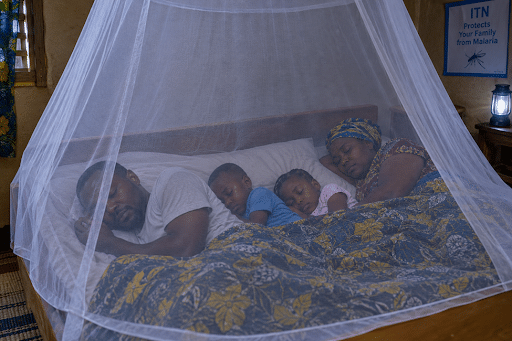
“An insecticide-treated net (ITN) is a net that repels, prevents blood-sucking, and/or kills mosquitoes after contact due to the presence of insecticide on the netting material. These nets are either conventionally treated nets or long-lasting insecticidal nets,” according to the ITN distribution campaign manual. According to the outcome of the statewide mass ITN distribution campaigns by the NMEP (Nigeria’s National Malaria Elimination Programme) in collaboration with other partners’ activities, such as USAID and AMF (Against Malaria Foundation), the use of ITNs is an effective intervention for malaria prevention. After receiving a new net, the first step is to spread it under a tree or roof, not under the sun, for only 24 hours. After which it is mounted on four points, hanging over the sleeping area, mat, or bed, to effectively cover the area. During the day, the net is lifted above the sleeping area, while it is dropped down at night with the windows open to keep the room ventilated. Finally, wash the net when it’s dirty with mild soap only.
Conclusion
Malaria is an endemic disease throughout Nigeria, and we account for one-quarter of all malaria cases in Africa. The implication of this is increased morbidity and mortality rates, which requires an urgent preventive intervention. Therefore, the distribution of insecticide-treated nets, raising awareness, and prevention campaigns contribute significantly to a reduction in malaria cases.
Social Media: http://www.linkedin.com/in/mercy-odewale-20685622a

Comments are closed.