
Introduction
Did you know that in Madagascar, some communities govern themselves without a prefect, court, or written civil code? For centuries, two traditional practices have continued to shape village life and influence how residents coordinate with one another: fokonolona and dina. Far more than customs, they lay the foundations for effective civic participation. So, how can this synergy between tradition and governance become a genuine driver of territorial development?
The Fokonolona: Social Cohesion and Substantive Democracy
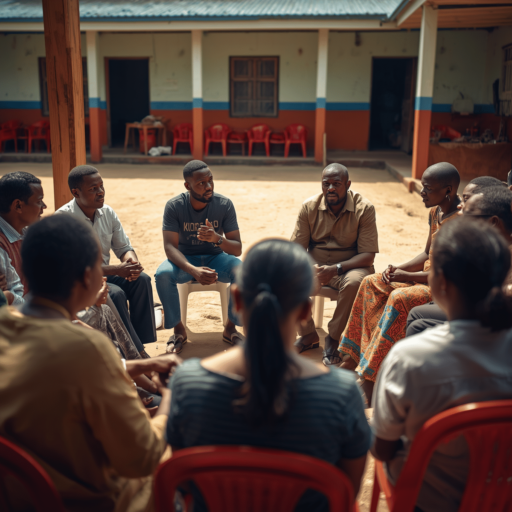
The word fokonolona comes from foko (group) and olona (human being). It refers to a group of people united by shared identities and organised around the Fokontany, which represents the group’s territory. Beyond its administrative dimension, the fokonolona functions as an extended family. When a resident dies, the entire neighbourhood spontaneously comes together to offer condolences, assist the bereaved family with formalities, and provide moral support. This solidarity fosters mutual trust, which forms the foundation for collective decision-making. Rather than relying on majority voting, people discuss, debate, and seek consensus that reflects the common interest.
The Dina: Law Created by the People
The dina, which can be translated as a pact or social agreement, consists of rules adopted by the fokonolona to promote harmonious coexistence. Unlike laws passed by Parliament, it is discussed, amended, and approved by the community. Its areas of application are diverse, including security, neighbourhood disputes, and popular justice, or fitsaram-bahoaka. In some localities, the dina prohibits polluting or dirtying a shared space, with a fine of 5,000 ariary (approximately USD 1.15), sometimes accompanied by daroka, or physical punishment. Why is such a sanction respected despite its controversial nature? Because it comes from the community itself. As one elder puts it: “The dina is the law of the people, not that of politicians.”
Living Rural Communities, Fragile Urban Communities
When these two institutions function fully, they become catalysts for change. Community projects are sustained over time, everyone contributes, and knowledge and skills are shared. Valuable human capital is built. Yet this social dynamic is under threat. In large cities, urban lifestyles are gradually weakening these traditions. In rural areas, however, the tradition remains strong: the fokonolona still shapes everyday life with remarkable effectiveness.
Conclusion
The fokonolona and dina are not relics of the past. Their cultural significance is such that the former is recognised in the preamble and Article 152 of the current Constitution, while Law No. 2001-004 of 25 October 2001 regulates the latter in matters of public security. However, this recognition remains theoretical and incomplete. At the same time, certain practices such as daroka raise concerns because they conflict with human rights. The challenge now is to design inclusive and hybrid mechanisms capable of integrating this system into contemporary realities without losing its endogenous character.
Social Media: https://www.facebook.com/steward.raoeliarinoro

Comments are closed.