
Introduction
Integrating innovation and digital infrastructure is transforming scientific research in Africa. With the expansion of the citizen science movement, the main concern is to increase the level of research quality and eliminate technical issues in the meantime to make it available to the public. Public participation in science increases when bridging the gap between professional laboratories and community volunteers. Understanding this evolution reveals how refined validation methodologies and localized digital tools are reshaping the mechanics of data collection.
Enhancing Research Accuracy through Algorithmic and Peer Validation
One of the conditions needed to enhance citizen science research is validation. It is a critical requirement that improves this research by integrating several stages of data validation. Usually, crowd-sourced data is so questionable that it is not reliable. This issue is currently tackled by combining automated algorithms with community-based peer review. Here, machine learning is utilized to highlight anomalies, including geographic outliers or questionable measurements. This results in excluding any errors before relying on data collected in the research process. Meanwhile, with the aid of experienced volunteers, this process is managed successfully to verify data collected locally. This strategy guarantees the accuracy of data collected and meets the standards required to publish research in peer-reviewed journals.
Enhancing Data Collection via Mobile Hardware and Apps
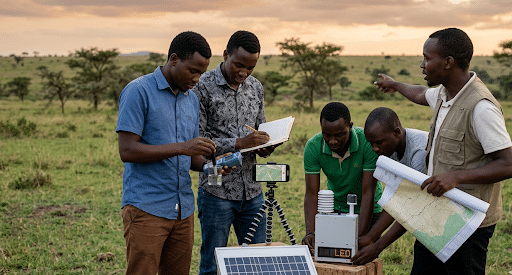
Relying on customized mobile applications as well as smartphone features leads to collecting metadata while requiring no technical training in the process. These features include GPS tracking, time-stamping, and high-resolution cameras. Moreover, citizens manage to monitor the environment using open-source physical tools or affordable applications. Mobile devices have features that enable citizens to measure environmental changes such as air quality, weather, and chemicals in water using affordable applications on smartphones. This changes ordinary smartphones into accurate research laboratory tools.
Expanding Inclusivity through Offline and Gamified Software Design
As for developers, they play a vital role in this process. Expanding participation in various areas requires developing tools that adapt to low-connectivity environments and low-literacy populations in Africa. Offline modes are presented as an effective feature enabling volunteers in rural areas to share ecological or agricultural data in remote areas and share their findings once they have coverage. Furthermore, interfaces are simplified to match their literacy issues. For instance, they rely on using icons and generating voice commands. Gamifying the reward system enhances participation of low-tech individuals, as well. Hence, traditional barriers of education and technical background are eliminated. Geographic isolation is no longer preventing citizens in Africa from having access to global science contributions.
Conclusion
Scientific research in Africa is enhanced when all citizens are granted the opportunity to share in making progress by eliminating technical and literacy barriers. Meanwhile, developers should share in creating mobile apps with features matching these needs while optimizing validation of data collected.

Comments are closed.