
Introduction
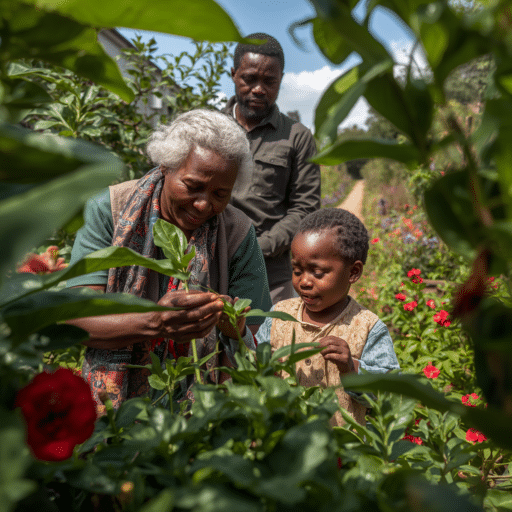
Every village and almost every family has a grandmother who knows the secrets of herbal remedies for babies. She knows which leaf soothes a crying tummy, which root strengthens a weak child, and which mixture can help fight malnutrition. Yet, this knowledge often goes unnoticed. It is practiced by grown-ups, by grandmothers, without a succession plan. The youth, busy with modern life, rarely see the value in preserving it. Like so many cultural treasures lost to modernization, this, too, is at risk of vanishing.
The Heritage of Indigenous Healing
This is not just about children’s healing stories; it reflects our continent’s heritage. Long before modern medicines arrived, our grandparents relied on indigenous plants to heal and nourish us. Today, modern medicine dominates, and while it has its place, our reliance on it risks erasing the very knowledge that sustained generations. Indigenous child healing is often dismissed as superstition. People say, “There is a mosadimogolo (grandmother) somewhere who knows how to heal a child, but she is not a doctor.” Yet the evidence is clear: these remedies work. They are rooted in centuries of observation, practice, and cultural wisdom. Unfortunately, little is being done to preserve this knowledge.
Africa’s Resources: Exported and Devalued
Meanwhile, Africa’s raw materials are exported to the western countries or other industrialized nations, processed, and sold back to us at high prices. Our continent is paid less, while foreign industries profit from what grows in our soil. We are cheated twice: first by losing our indigenous knowledge, and second by buying back what we already have. Herbs that grow freely in our land are dismissed as “witchcraft” or “evil,” by our very own countrymen, imagine, but when packaged abroad and labelled “organic,” they suddenly gain value. How did we get here? Religion, colonial influence, and modern consumer culture have all contributed to this shift. We have been taught to distrust our own roots, even though they are the foundation of our health. The irony is painful: we celebrate imported herbal teas in fancy shops while ignoring the very plants that thrive in our backyards.
Conclusion
Preserving indigenous knowledge is not about rejecting modern medicine. It is about balance, respect, and continuity. Children deserve to inherit both worlds: the scientific advances of today and the ancestral wisdom of yesterday. Communities must document, teach, and practice these traditions before they fade. Elders should be honored as custodians of healing, and younger generations must be encouraged to learn from them. Africa’s future health depends not only on hospitals and pharmacies but also on the roots, leaves, and stories passed down through generations. If we fail to preserve this knowledge, we risk losing more than medicine, we risk losing identity, resilience, and the very essence of who we are.

Comments are closed.