
Introduction
“They said the vaccine can make you infertile.”
For some Nigerians, that sentence was enough to create fear.
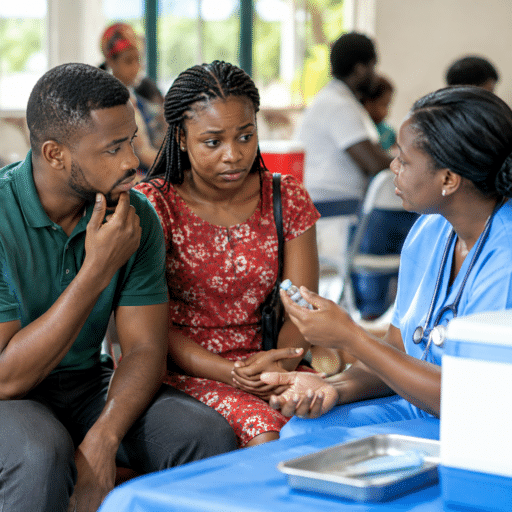
During the COVID-19 pandemic, claims that vaccines could cause infertility travelled rapidly through social media, messaging platforms and everyday conversations. What made these claims particularly powerful was not simply fear of a vaccine, but fear of losing something deeply valued: the ability to have children. In Nigeria, fertility is often more than a medical concern. It can be closely connected to marriage, family expectations, identity, and social acceptance. When misinformation attaches itself to something this personal, a public-health decision can quickly become a deeply personal threat.
When Fear Travels Faster than Facts
Misinformation does not always arrive looking like misinformation. Sometimes it is a forwarded WhatsApp message. Sometimes it is a frightening Facebook post or a voice note from someone introduced as a health professional. And sometimes, it comes from someone we trust. That matters. A Nigerian study across the country’s six geopolitical zones identified 33 different COVID-19 misinformation and conspiracy narratives, demonstrating the scale and variety of false claims circulating during the pandemic. Another Nigerian study found that negative information from social media, family and friends influenced vaccine confidence among healthcare workers. WhatsApp did not create vaccine misinformation. But its private groups, personal networks and ease of forwarding information can allow an unverified claim to move rapidly between people who already trust one another. A message does not necessarily become credible because it has been verified. Sometimes it becomes credible because it has been repeated by people we know.
But What about Infertility?
This is where we must separate fear from evidence. There is no credible evidence that COVID-19 vaccines cause infertility. The World Health Organization states that people planning pregnancy can receive COVID-19 vaccination and that available evidence has not identified adverse effects on fertility or the ability to become pregnant. The U.S. Centers for Disease Control and Prevention similarly reports no evidence that COVID-19 vaccines cause fertility problems in women or men. Yet the fertility narrative has persisted beyond COVID-19. Nigeria’s experience with the HPV vaccine provides an important example. Research on HPV vaccination in Nigeria has identified concerns about infertility and population control among the misconceptions contributing to vaccine hesitancy. A 2025 Nigerian Delphi study involving immunisation stakeholders ranked the infertility/population-control misconception as the leading misconception surrounding HPV vaccination. This tells us something important: infertility misinformation is not simply a COVID-19 problem. Fertility has become a powerful point of fear in vaccine misinformation. More information is not always the solution We often respond to misinformation by giving people more information. But information literacy asks a different question:
Can People Evaluate the Information They Receive?
Before forwarding a health claim, we should pause and ask: Who made this claim? What evidence supports it? Is the source qualified? Is this a personal story or scientific evidence? Can the claim be independently verified? These questions help us move from “Someone I trust sent this to me” to “How do we know this is true?” That shift is critical. A 2026 study of 870 Nigerian adults across the six geopolitical zones found that 89.4% of vaccine-hesitant participants endorsed at least one COVID-19 conspiracy theory. It also found that as the number of conspiracy beliefs increased, the likelihood of vaccine acceptance decreased. One false claim can make another seem plausible. Fighting misinformation requires trust. The answer is not to mock people who are hesitant. Telling someone “You believe fake news” may end the conversation rather than change their mind. We need health professionals, scientists, journalists, community leaders and communicators who can address concerns without dismissing them. We also need information-literate citizens who understand that being shared widely does not make something true, and being familiar does not make something credible.
Conclusion
The goal should not simply be to give Nigerians more information. It should be to build the capacity to find, question, evaluate, and use information responsibly. Because misinformation does not always shout. Sometimes it arrives quietly, from someone we love, in a message that says: “Please, I am only sharing this because I care about you.” And when the message threatens something as deeply personal as fertility, fear can become more persuasive than facts. That is why fighting health misinformation is not only a public-health responsibility. It is an information-literacy responsibility.
Social Media: https://web.facebook.com/Mercy.Omale.N

Comments are closed.