
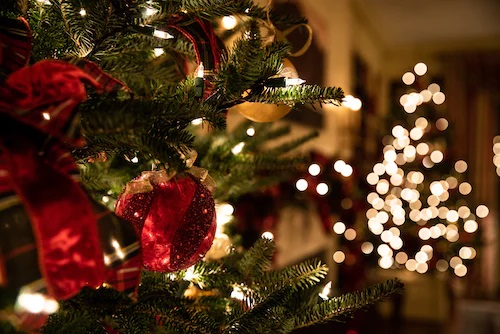
Nigerians have always loved holidays because we work hard. And the Christmas season is primarily one that brings a lot of gladness and love.
Of course, being Nigerian means we get to develop our cultural values for almost everything, and Christmas isn’t an exception. Amidst significant changes in the seasons, the spirit of Christmas still always dominates the special day of December 25th.
Preparing for Christmas In Nigeria
Christmas is the biggest celebration in Nigeria, since over 60% of our population are Christians. But it is even celebrated more widely.
Nigerian families travel across the country, where they meet relatives they haven’t been seen throughout the year. Distant cousins get to reunite with each other and make the best of memories. Parents get to take time off work to be with their children, relax, and chill. Grandparents can hug their grandchildren again and shower them with love.
Ushering in the season of Christmas is what Nigerians call the “Ember months”, in which it has been witnessed over the years that the prices of items slowly but surely climb until things become quite or slightly more expensive over the next few weeks to Christmas than they used to be. It is also known that during this time, people begin to make preparations for the season, purchasing the necessary items they need for themselves and family quite early before the story of things being too expensive comes into the picture.
As a result of the seasonal hassle, some really funny scenarios occur, as some parents, like mine back in the day, would purchase oversized clothes for their children, expecting them to grow to fit the clothes before Christmas day.
Sometimes, children are lucky enough to be taken to the market alongside their parents to choose what they want to wear on Christmas day. But as children will always be children, we would still be proud to flaunt our new clothes, however fitting it may look to our neighbours anyway, with our rubber glasses, plastic wrist watches and lighting sneakers.
These are some of the best memories a child could ever have, growing up.
Pointers to the Christmas season
Nigerians use several pointers to commemorate the unfolding of the Christmas season, one of which is the “Harmattan.”
As though it was a person, Nigerians, where I grew up, would say, “harmattan don come oo”. This used to be one of the “trying periods”, but most interesting and loved by everyone. People wake up to frigid weather, and children have to bathe in hot water, which they love so much. A lot of skin becomes dry and white, especially for children who love playing outside. And the lips begin to develop tears from dryness, so you don’t get to smile too much if you haven’t done the necessary rituals of anointing your lips. Usually, we would use petroleum jelly or any cooking oil to lubricate the lips, boys and girls looking all lip-stick charming.
But I heard someone say, “the harmattan may as well begin in February 2023”. And that’s the experience for many Nigerian states currently, and I think that it has caused a significant effect on the unravelling of the Christmas energy for many people who know how it used to be.
Blaming global warming and climate change, the harmattan season usually would usher in the spirit of Christmas, and the consciousness of the season keeps growing until it gets to Christmas Eve, which was even one of the most anticipated days in addition to the actual Christmas day.
Another pointer to the closeness of the celebrations was the sound of firecrackers, which we still call “knockout”. I may recall when we would recognize the first sound of “knockout” we heard for the season and simultaneously look at each other in excitement. Christmas Eve was often one of the more exciting nights when everyone stayed up during the night, with music playing loudly from shops in the street. The knockout sound can also be heard everywhere; young people light them up continuously while little children play with their party sparklers, which we call “Bisco”.
The following morning, which was Christmas day, will have the smell of food hovering in the atmosphere, prepared by different families. Neighbours are yelling, “Happy Christmas”, and someone else responds, “I wish you the same”. Some would exchange food and drink items, while others were preparing to go to church, with siblings ready in their matching Christmas clothes.
Christmas would not be complete without the food, of course. Families explore Nigerian food varieties, from pepper soup and plantain to all variations of rice preparations. Visitation of friends and other relatives, alongside the giving and receiving of gifts, most money is a valuable part of the celebration as well.
As a random saying goes, one of the most painful things is wearing suitable attire and not taking pictures. This usually ends the day for plenty of Nigerian families, as they troop into photo studios to have their pictures taken to remember the day’s celebration and for that year.
Anyways, it’s clear that things are not how they used to be, but that is nowhere near stopping Nigerians from celebrating. People now use mobile phones to capture perfect pictures of themselves, which can be saved on the internet instead of having a paper copy.
Currently, the Christmas season might not be as exciting for adults as it used to be when they were children, but Nigerians always get to make the best of every season. For this year’s Christmas, it’s time to visit new places, go to cinemas, hang out with friends while making new ones, connect with people, and most importantly, share fun time and memories with family.
To conclude, simple random events like hearing “compliments of the season” from someone significantly impact restoring the consciousness of the season to anyone who hears it. Nigerians will always cherish the season of Christmas celebration and what it brings.
