
Introduction
Africa’s future is not built solely in government boardrooms or at international summits. It is also shaped in lecture halls, laboratories and university campuses across the continent. With more than 60% of its population under the age of 25, Africa has exceptional demographic potential. Faced with climate change, natural resource degradation and the need to create sustainable jobs, Education for Sustainable Development (ESD) has become an essential strategic tool.
Growing Opportunities, but Uneven Progress
In recent years, several African universities have begun integrating sustainable development into their academic programmes. Dedicated undergraduate and postgraduate degrees have emerged in different countries. In West Africa, institutions offer programmes in environmental sciences, sustainable development engineering, sustainable agriculture and sustainability project management. The University of Bondoukou in Côte d’Ivoire, through its Faculty of Governance and Sustainable Development, and CIFRED at the University of Abomey-Calavi in Benin illustrate this growing momentum. Elsewhere across the continent, programmes in Climate Change and Sustainable Development are also expanding.
Persistent Structural Challenges
Several obstacles continue to hinder the full development of ESD in Africa. First, programmes remain largely theoretical and insufficiently connected to local realities. Indigenous knowledge, traditional resource management practices and the specific challenges facing African communities, including drought, deforestation, food security and rapid urbanisation, are not fully integrated into curricula. Second, inadequate teacher training, limited educational resources and insufficient funding affect the quality of education. Finally, links with the labour market remain weak in some cases. Without partnerships with key stakeholders, graduates may struggle to translate their skills into tangible professional opportunities.
Towards Truly Transformative Education
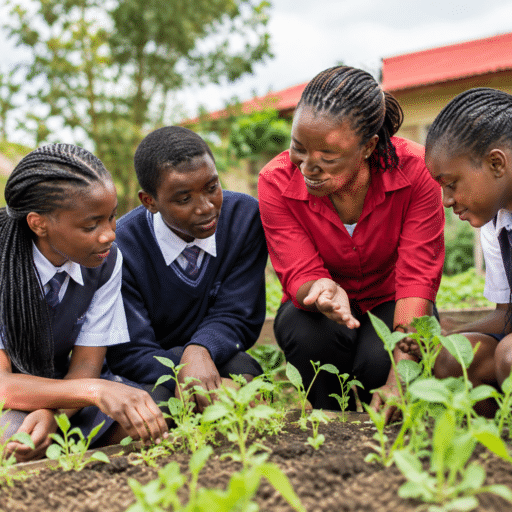
For ESD to fulfil its potential, teaching must incorporate local challenges, African knowledge systems and field experiences. Practical learning should be strengthened through internships, supervised projects and partnerships with development stakeholders. Continuous teacher training remains essential. Universities must also embrace an interdisciplinary approach combining environmental sciences, economics, social sciences, law and technology. Finally, alignment with national and continental priorities, particularly the African Union’s Agenda 2063 and the Sustainable Development Goals, will strengthen the coherence and impact of these programmes.
An Investment in the Future
ESD is not simply an addition to existing academic programmes. It is a strategic investment in preparing a generation capable of addressing Africa’s environmental, social and economic challenges. It can contribute to creating green jobs, strengthening community resilience and promoting more inclusive and sovereign development. The challenge now is to expand these efforts across the continent.
Conclusion
Education for Sustainable Development is one of the most powerful tools for turning Africa’s demographic and environmental challenges into genuine opportunities. It requires clear political commitment, adequate resources and an approach firmly rooted in the continent’s realities. Young Africans deserve educational opportunities that equip them not only to understand the challenges of their time, but above all, to transform them.

Comments are closed.