
Introduction
For women, voluntary skin lightening sometimes goes beyond the pursuit of beauty. It can reflect deep-seated emotional distress and unresolved inner wounds. Skin lightening involves the use of chemical products to lighten the skin. This practice is becoming increasingly widespread in African societies, sometimes to an extent that is difficult to imagine.
Skin Lightening Is No Longer Limited by Social Status or Gender
In the past, skin lightening was often associated with women who had limited financial resources and insufficient information about the consequences of the practice. Today, it affects people from all social backgrounds, regardless of gender or educational level. Some are aware of the risks, enjoy financial stability, and still choose to engage in it. What is even more concerning is that some of these individuals are role models who influence younger generations.
When the Desire to Look Like Others Leads to Skin Lightening
Accepting oneself is not always easy, especially when one’s surroundings offer little encouragement. A woman who is disconnected from her inner self may struggle to embrace who she truly is. By repeatedly viewing her skin colour as less beautiful, she may develop an excessive desire for a different complexion. This can lead to skin lightening and its consequences. The goal then becomes to resemble someone who appears to be more successful in life because of their skin colour. The grass may sometimes seem greener on the other side. Skin lightening can therefore reveal a deep lack of self-esteem.
When the Fight Against Skin Breakouts Leads to Skin Lightening
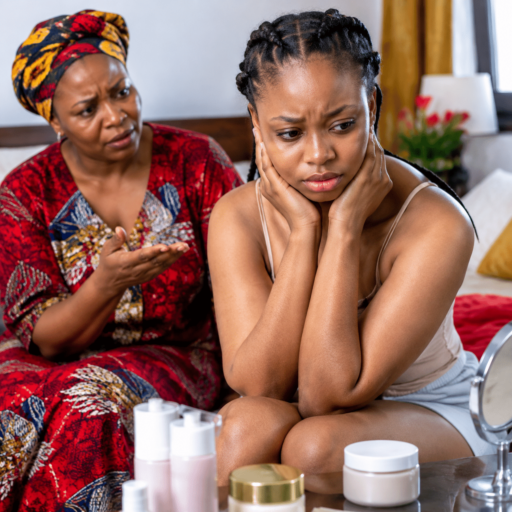
During puberty, some girls turn to skin lightening to address skin breakouts or to look like their peers, whose lighter skin appears clearer to them. Hurtful remarks from people they respect or admire can intensify their emotional distress. Gradually, this distress may lead to isolation, loss of confidence, and low self-esteem. The face plays an important role in social interactions, but relationships are influenced by more than physical appearance; emotional well-being matters too. Despite lightening their skin, some women still do not feel beautiful or loved. Dissatisfied with the results, they become trapped in a vicious cycle, resorting to increasingly harsh products in the hope of becoming more beautiful and feeling more valuable.
Conclusion
True beauty is not found solely in the cosmetic products available on the market. It also lies within each individual. The key is to recognise it, embrace it, and nurture it.

Comments are closed.