
Introduction
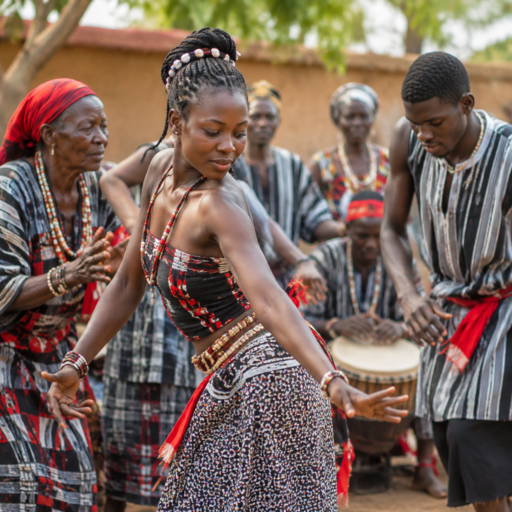
In Burkina Faso, life unfolds to the rhythm of dance steps. From funeral rites and initiation ceremonies to the joyful celebration of a birth or a wedding, the moving body preserves collective memory. Within this traditional worldview, not knowing the dances of one’s community is almost unthinkable. One might assume that this widespread practice makes every citizen a potential dancer. Yet dance still struggles to gain recognition as a genuine profession.
A Simple Social Practice
Because dance is perceived as a natural social activity, audiences rarely associate it with paid performances. For many people, choreography is a gift or a form of community entertainment. This perception discourages audiences from attending ticketed performances. Today, venues are largely filled through a system of reciprocity: cultural practitioners support choreographers because the latter, in turn, attend their events. The challenge is to break this cycle and attract passionate spectators willing to pay for a dance performance just as they would for a football match or a contemporary music concert.
A Profession Requiring Discipline, Expertise and Structure
Making a living from dance in Burkina Faso requires far more than simply performing festive steps. Whether preserving traditional dances, developing contemporary dance, or expressing oneself through urban dance, each style requires specialisation. A professional dancer is both a high-level athlete and a researcher. The work involves daily rehearsals, intense physical training, and rigorous preparation. Choreographers manage companies, design complex stage productions, and tell stories through movement. This demanding intellectual and physical profession requires solid technical training.
Professionalisation as a Means of Preserving Cultural Heritage
For generations, village squares and moonlit gatherings served as natural learning spaces for young people. With urbanisation and changing lifestyles, these spaces for social interaction are disappearing. Opportunities for young people to discover, learn, and practise traditional dances in their original settings are becoming increasingly rare. This is precisely where professionalising dance becomes essential. Turning dance into a profession means transforming ancestral knowledge into modern teaching programmes. It also means establishing schools, training centres, and festivals capable of preserving this endangered heritage while sharing it with the world.
Conclusion
Recognising dance as an artistic profession does not mean severing it from its popular roots or social function. On the contrary, it gives creators the means to promote Burkinabè culture beyond national borders. The dancing body is not merely a source of entertainment; it represents an entire industry, a generator of employment, and a critical mirror of society. It is time for audiences to step into dance centres and discover not mere folklore, but the excellence of a thriving professional sector.
Social Media: https://www.facebook.com/share/1CbxK9atMd/

Comments are closed.