
Introduction
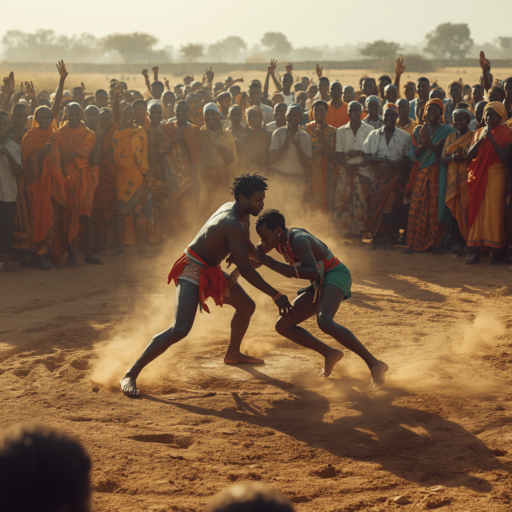
In Niger, when the drums begin to beat and wrestlers enter the arena, the entire atmosphere changes. Families gather, young and old take their seats, and everyone comes to support their champions. Traditional wrestling is deeply rooted in our history and culture. It brings together communities from different regions, highlights the richness of our diversity and reminds us of the importance of passing Nigerien identity on to future generations.
A Tradition That Tells Our History
Long before becoming the “king of sports,” traditional wrestling was already part of community life in Niger. It was practiced during major community gatherings and after certain agricultural seasons. Depending on the region, it is known by different names, such as Kokowa, Zabuwa, Goudjey and Gourguey, reflecting the richness of the traditions surrounding it. Over time, the practice evolved. Wrestling was introduced into Youth Week in 1973, before the national championship was officially established in 1975. Since then, the Sabre National has become a major event in Niger’s sporting and cultural life. In 2025, the 46th edition, held in Tahoua, also marked fifty years of this national competition.
When the Arena Becomes a Cultural Stage
Looking only at the fight means seeing only one part of traditional wrestling. Even before a wrestler attempts to bring down his opponent, the arena is already alive. The kirari, walki, traditional dances, songs, musical instruments, clothing and ornaments worn by the wrestlers give each competition its unique identity. A wrestler therefore does not enter the arena alone: he carries with him the history and symbols of his community. Those who look only at the fight see two wrestlers. Those who look around the arena see an entire people.
An Arena That Brings People Together and Opens Its Doors
Traditional wrestling has another powerful strength: it creates opportunities for people who might never have met under other circumstances to come together. In the arena, regions defend the honor of their champions, but beyond the competition, communities share in the same celebration. This ability to unite people can also promote inclusion. Initiatives such as wrestling for people with visual impairments show that this discipline can open its doors to more participants. When wrestlers from different African communities meet, they create opportunities for discovery, exchange and stronger ties between peoples.
Conclusion
Nigerien traditional wrestling is much more than a sport. It is a living memory that allows young people to discover the traditions inherited from their ancestors while giving different communities a space to meet and celebrate. Its kirari, walki, dances, songs, clothing and ceremonies give the arena a cultural dimension that goes far beyond the outcome of a fight. Preserving this tradition therefore means more than maintaining a sporting competition. It also means protecting a part of our identity and allowing our heritage to continue to live.
Social Media: https://www.facebook.com/share/1FAZ6JpFpM/

Comments are closed.