
Introduction
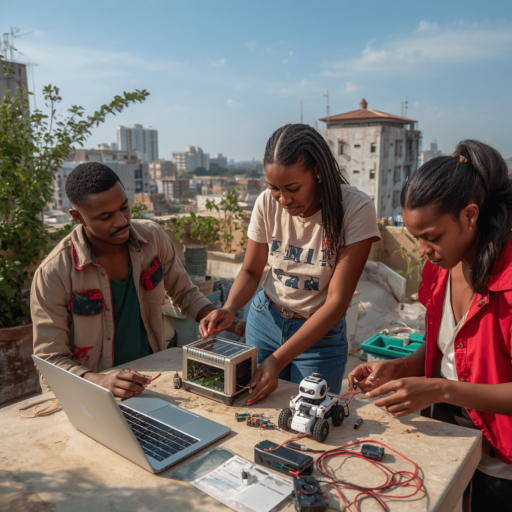
Africa is home to the youngest population in the world, and that youth is increasingly digital. Across the continent, smartphones, social media, artificial intelligence and online platforms are opening doors to opportunities that go beyond geographical and economic boundaries, transforming not just how young Africans communicate, but what they are able to achieve.
Technology and Access to Education
Young Africans can now take courses from universities and organisations around the world without leaving their communities. Platforms such as YouTube and Coursera provide access to skills in technology, business, design and entrepreneurship, making continuous learning more accessible to those who may not have had traditional educational opportunities.
New Pathways to Employment and Entrepreneurship
Remote work platforms allow young Africans to work for clients across the world while remaining at home. A graphic designer in Ghana or a software developer in Nigeria can now serve international clients without relocating. At the same time, social media has lowered the barriers to starting a business, allowing young entrepreneurs to build brands in fashion, food and digital services with relatively low start-up costs. Mobile money, digital lending and platform-based logistics have opened job categories that did not exist a decade ago, and Africa now has the highest female entrepreneurship rate in the world, with women-owned businesses generating an estimated 18 million jobs across the continent. Analysts also project that over 230 million jobs across Sub-Saharan Africa will require digital skills by 2030, opening close to 650 million training opportunities for young people willing to learn.
A Stronger Voice for Young People
Through social media, podcasts, blogs and digital communities, young Africans can share their stories, advocate for social change and connect with others who share their interests and aspirations, giving a generation once overlooked a genuine platform to be heard.
Conclusion
Challenges such as unequal internet access, digital literacy gaps and the cost of devices remain, and closing them will be essential to ensure the benefits of technology reach more young Africans. Even so, technology has already become one of the shortest paths from an idea to an income. With the right skills, infrastructure, and opportunities, Africa’s young population can use it not only to participate in the global economy, but to build the solutions that shape the continent’s future.

Comments are closed.