
Introduction
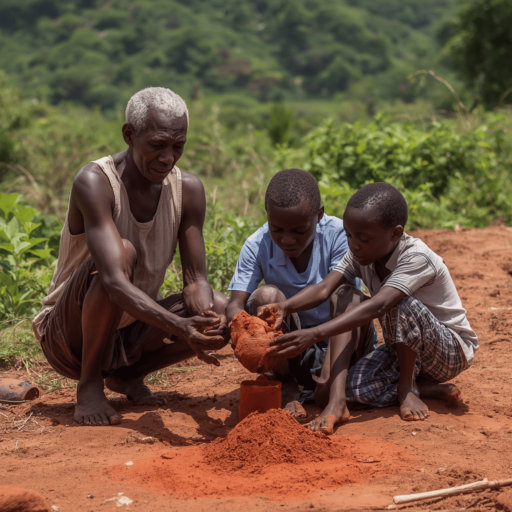
Tany carries deep meaning for the Malagasy people. More than a physical space, it represents cultivated land, a place of origin, and a heritage passed down from one generation to another. Malagasy people therefore attach great importance to their land, which feeds families, honours ancestors, and strengthens a sense of belonging to a community.
The Malagasy Environment: A Culture of the Land
Tany, which refers to land or soil, is a natural element of the environment. Rural, urban, and peri-urban landscapes feature tanimbary, meaning rice fields or literally “the land of rice,” as well as tanimboly, referring to cultivated land. Rice is considered the country’s staple food, known as foto-tsakafo in Malagasy. Farmers also take great care of the land to support off-season crops.
The Cradle of Origins
Tany is not only associated with agriculture. It also refers to one’s place of origin, known as Tanindrazana, literally “the land of the ancestors.” According to an excerpt from the sixth grade textbook Lovako T6, page 51, it refers to the home or place where one’s parents, roots, and identity are found, including the house where one was born, the village where one’s parents lived, and the ancestral tombs. At the same time, Tany faces threats such as doro tanety, or bushfires. A Malagasy proverb states: “Izay mandoro tanety, mandoro tanindrazana”, meaning, “Whoever burns the hills burns the land of the ancestors.” For Malagasy people, ancestral land is therefore a precious heritage to be preserved, as it strengthens belonging and keeps alive the memory of one’s origins.
A Precious Heritage: The Emergence of Another Concept
Tany has become more than the land of the ancestors. It has also come to represent the land destined for future generations, expressed through the term Taninjanaka. This concept emphasizes the transmission of heritage to children. Today, Taninjanaka is used in environmental and humanitarian initiatives, particularly through hashtags and social media campaigns. The slogan “Ho an’ny Taninjanaka”, meaning “For the land of our children,” expresses a commitment to protecting the country for future generations.
Conclusion
Tanimbary, Tanimboly, Tanindrazana, and Taninjanaka all share the same root: Tany. Land is therefore not only a natural element of the environment but also a heritage carrying history, identity, and responsibility towards future generations.
Social Media: https://www.linkedin.com/in/zoely-rasolomampionona-07071226a

Comments are closed.