
Introduction
The rapid pace of urbanization in Africa is accompanied by major challenges, including air pollution, excessive water consumption, massive waste generation, and soil sealing. In response to these environmental pressures, eco-districts offer an alternative housing model that incorporates sustainable development principles from the design stage. These urban areas are designed to minimize their ecological footprint while combining residential comfort with environmental protection. Their growing development across the continent therefore deserves closer attention.
The Environmental Foundations of Eco-Districts
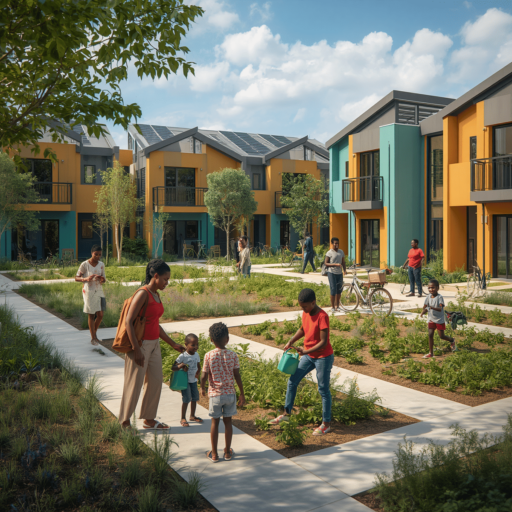
An eco-district is first distinguished by its environmental performance. This involves bioclimatic building design, which reduces the need for air conditioning, as well as the use of locally sourced, low-carbon materials such as compressed earth, recycled concrete, and bamboo. Renewable energy, particularly solar photovoltaic power, also plays an important role. Water management is another key element. Rainwater harvesting through green roofs and landscaped drainage systems, combined with wastewater treatment using plant-based filtration systems, helps reduce pressure on public networks and limit flood risks. Finally, the preservation of green spaces and the creation of ecological corridors contribute to maintaining biodiversity in urban areas.
Benefits for the Urban Environment and Biodiversity
Beyond individual buildings, eco-districts also improve their surrounding environment. Green roofs, green facades, and landscaped public spaces create ecological corridors that encourage the return of plant and animal species to urban areas. Trees and permeable surfaces help reduce urban heat islands, a phenomenon increasingly common in major African cities. As a result, these neighborhoods improve residents’ quality of life. Mobility is also reorganized around walking, cycling, and public transport, reducing CO₂ emissions and improving air quality. These measures help make cities more resilient to climate change.
Success Factors and Challenges
The widespread development of eco-districts in Africa faces several obstacles. The high initial cost of green technologies may discourage developers and make housing unaffordable for low-income households, making low-tech construction solutions particularly important. The lack of appropriate standards and local technical expertise is another challenge. To overcome these barriers, it is essential to promote simple and resource-efficient solutions based on local materials and traditional knowledge, while training artisans in eco-construction techniques. Social and functional diversity is also essential. Involving future residents in the design and management of their neighborhoods is a key factor in ensuring their long-term sustainability.
Conclusion
Eco-districts offer a structural response to the environmental challenges created by rapid urban growth in Africa. By combining responsible resource management, biodiversity conservation, and sustainable mobility, they provide healthier and more resilient living environments. Although their development remains at an early stage, their success depends on political commitment, local innovation capacity, and community engagement. If adapted to specific socio-economic contexts, this model could become a major driver of sustainable and inclusive African cities.
Social Media: https://www.facebook.com/share/17b1EE1LMJ/

Comments are closed.