
Introduction
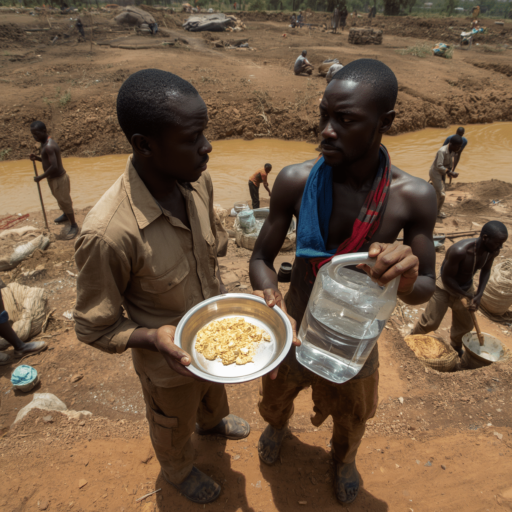
Illegal gold mining is now one of the most serious threats to land, water resources, and ecosystems in Côte d’Ivoire and several West African countries. In the search for a few grams of gold, agricultural and forest areas are damaged, while water sources can be exposed to various contaminants, including mercury. Behind the illusion of quick wealth lies a fundamental question: what are we willing to sacrifice to extract this resource? Between gold, which can generate wealth today, and water, which makes life possible tomorrow, the choice concerns everyone, including future generations.
Illegal Gold Mining: When the Search for Wealth Destroys Our Natural Heritage
Gold is a valuable resource, and its extraction can contribute to economic activity when it complies with regulations and respects the environment and local communities. The problem arises when mining becomes illegal, uncontrolled, and destructive. In areas affected by illegal gold mining, agricultural land is excavated, vegetation is removed, and landscapes are profoundly transformed. Areas that could have supported productive activities sometimes become abandoned mining sites. The consequences go far beyond the amount of land destroyed. Agricultural land represents the capacity to produce food. Forests provide habitats for numerous species. Rivers provide essential services to both communities and ecosystems. In extracting wealth hidden beneath the soil, we therefore risk destroying other forms of wealth whose value is immeasurable.
From Land to Water: The Invisible Danger of Pollution
The threat becomes even more serious when mining activities affect water resources. Extraction and ore processing can disturb soil and generate sludge and waste that may degrade aquatic environments. The use of mercury is a particular concern. In some forms of artisanal gold mining, mercury is used to recover gold. When released into the environment, it can contaminate soil and aquatic ecosystems and, under certain conditions, be transformed into methylmercury. This substance can accumulate in aquatic organisms and move through the food chain.
Protecting Water: A Collective Responsibility
Combating illegal gold mining requires a comprehensive approach combining enforcement, awareness, environmental restoration, and economic alternatives. Authorities must strengthen monitoring, enforce regulations, protect water sources, and ensure the restoration of degraded sites. However, the State cannot act alone. All citizens must contribute to protecting natural resources. Credible economic alternatives must also be developed in agriculture, livestock farming, agricultural processing, crafts, and other income-generating activities.
Conclusion
Illegal gold mining therefore raises a question that goes far beyond the pursuit of wealth: what value do we place on life, water, agricultural land, and the environment? Gold can generate economic wealth, but it cannot replace drinking water, fertile soil, or a functioning ecosystem. The choice belongs to everyone, but its consequences affect us all. Choosing gold at the expense of water may mean gaining today and losing tomorrow. Choosing to protect water means choosing life, health, dignity, and the future.

Comments are closed.