
Introduction
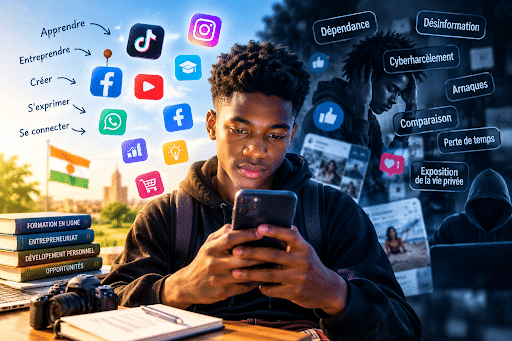
They are accused of wasting our time, spreading misinformation, making young people dependent on likes, and trapping us in increasingly sensational content. Every day, social media platforms are judged by what appears on our screens. But what if, for once, we gave them a chance to speak? From large African cities to small communities, an entire generation now lives with these platforms on a daily basis. The question therefore deserves to be asked: are we victims of social media, or do we also contribute to shaping what they show us?
A Trial That Already Seems Decided
The case against them seems strong. They are accused of making us spend hours scrolling through videos, promoting false information, exposing young people to harassment, and turning likes, comments, and views into measures of our worth. They are also accused of constantly showing us the same types of content. Someone watches luxury videos and receives more of them. Another person is interested in controversies and encounters more of them. A third follows educational content and may discover a wealth of useful resources. So, who is really making the choice? The accusation is easy: “It is the algorithm!” But the case deserves closer examination. What if we have simply forgotten to hear the accused?
Social Media Takes the Stand in Its Own Defense
“You say I show you too much violence. But how long do you stay watching these videos? You say I encourage controversy. But who comments on them by the thousands?” Platforms use recommendation systems that analyses different signals to determine which content is likely to interest us. Our clicks, searches, likes, comments, shares, and time spent viewing content are among the signals that can influence what we are shown.
What If the Screen Reflects Us More Than We Are Willing to Admit?
Social media can reflect our curiosity, anger, obsessions, ambitions, contradictions, and talents. In Africa, these platforms have enabled young people to create businesses, become content creators, learn new skills, showcase their cultures, and mobilize around social causes. However, the same platforms can also amplify rumors, hate speech, scams, misinformation, and toxic behaviours. The issue is therefore not simply, “What does social media do to us?” but also, “What do we do with social media?”.
Conclusion
We created social media. Every day, we feed it with our images, opinions, anger, dreams, and clicks. These platforms can influence our behaviour and amplify certain types of content, but they do not operate independently of how we use them. The real question may therefore not be whether social media is good or bad. It is about the place we give it in our lives and the responsibility we are willing to take for what circulates on our screens.
Social Media: https://www.facebook.com/share/1FAZ6JpFpM/

Comments are closed.