
Introduction
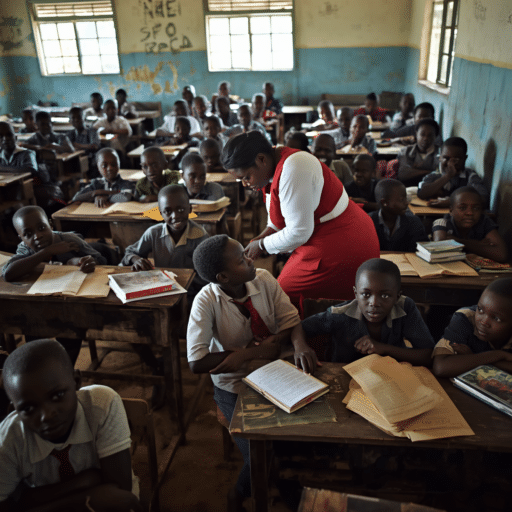
Many African countries have increased the number of children going to school, but going to school does not always mean learning well. Overcrowded classrooms, rural children travelling long distances with fewer teachers, and families struggling to cover uniforms, books and transport all mean that access to a classroom does not guarantee a good education.
Major Causes of the Crisis
The main causes of Africa’s education crisis include:
Insufficient funding: Schools don’t receive enough money to meet their needs.
Teacher shortages: Many schools lack enough qualified teachers.
Poverty: Families struggle to cover school costs for their children.
Rural inequality: Rural schools often have far fewer resources than cities.
Poor infrastructure: Many schools lack classrooms, electricity and reliable internet.
Climate and conflict: Floods, droughts and conflict can disrupt children’s education.
Who Is Most Affected?
The crisis affects many children, but those from poor families and rural areas face the greatest difficulties. Girls, children with disabilities, and children in areas hit by conflict or disaster face extra barriers.
What Can Be Done?
Building a resilient education system means shifting national priorities across several key areas:
Prioritise education funding: Governments must protect and sustain investment in education long term.
Put foundational learning first: Early literacy and numeracy prevent long-term learning gaps.
Invest in teachers: Better pay, training and conditions help attract and retain good educators.
Strengthen local leadership: Empowered school leaders can respond directly to local needs.
Use data to guide resources: School-level data should direct funding to the neediest communities.
Hold partners accountable: Transparent mechanisms ensure funding delivers measurable results.
Lessons from Rwanda
Rwanda’s primary completion rate has risen by about two percentage points a year, reaching 69% on-time completion by 2024, and 81% once late completers are counted — offering a compelling model for how targeted policy can transform national learning outcomes:
Free basic education: Removing financial barriers boosted enrollment and retention.
Curriculum and language reform: A competency-based curriculum in local languages improved comprehension and readiness.
Infrastructure investment: More classrooms and digital access eased overcrowding.
Progress tracking: Consistently measured outcomes kept reforms on track.
The Role of Young People
Young people are not only learners in Africa’s education systems; they are also part of the solution. Through peer education, volunteering, digital platforms and community initiatives, they extend learning beyond the classroom and speak up for change. They can also raise awareness of the challenges affecting learners and encourage others to value education.
Conclusion
A Call for Action. Improving education takes more than identifying what is wrong; it takes practical action. Communities can support learners, educators can share innovative teaching methods, and young people can launch initiatives that promote learning. Small, consistent actions add up to larger change. The goal is simple: learning environments where every child has a fair chance to build knowledge, skills and confidence.

Comments are closed.