
Introduction
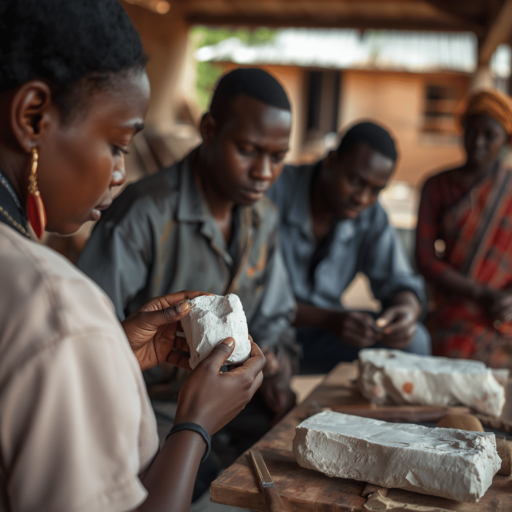
Gabon is renowned for the richness of its biodiversity and forests. Yet, in the southern part of the country lies another treasure that embodies its national identity and history: the Mbigou stone. A remarkably fine material, this soft rock is extracted from remote quarries and shaped by skilled artisans. It represents an essential part of Gabon’s cultural heritage, although its potential remains largely underexploited.
The Origins and Recognition of a Cultural Heritage
Extracted from remote and difficult to access areas, Mbigou stone has traditionally been used to create exceptional statuettes and handcrafted artworks. To preserve this valuable heritage, the recent adoption of a decree recognising it as a national Geographical Indication marks an important milestone. This decision aims to protect local craftsmanship from counterfeiting and uncontrolled exploitation while providing a legal framework for promoting and developing the stone.
Obstacles to the Sector’s Development
Despite this protection, Mbigou stone faces growing disinterest among younger generations. Long perceived simply as a souvenir for tourists, it does not yet provide sufficient income for artisans. Extraction remains physically demanding, while the lack of appropriate training facilities hinders the transmission of this expertise, which could otherwise provide valuable employment opportunities for young people. Moreover, these unique pieces are often sold at prices that fail to reflect either the physical effort involved in producing them or the rarity of the resource.
Drawing Inspiration from Jade
To restore value to this remarkable resource, it is useful to look at successful international examples, such as jade in China. Once mainly associated with art and collectible pieces, jade has successfully reinvented itself and become part of everyday life around the world, particularly through contemporary jewellery, interior design, and cosmetic tools. By adopting a similar approach, Mbigou stone could gain renewed recognition in Gabon and expand into these fields and beyond.
Conclusion
Mbigou stone is a Gabonese gem, appreciated by tourists and carefully preserved by many families in their homes. However, it faces significant challenges, particularly the difficulty of extraction and the lack of professional transmission of traditional skills. By investing in training and modernising its uses through accessories, decorative items, jewellery, and cosmetics, Gabon could inspire new generations of artisans, create decent employment opportunities, and give its craftsmanship the international recognition it deserves.

Comments are closed.