
Introduction
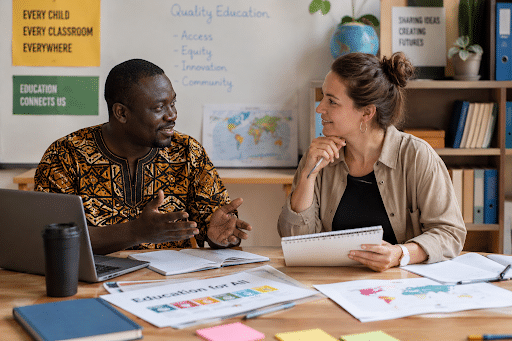
Education does not belong to any one continent. Every region of the world has developed its own ways of teaching, guiding, and supporting children as they grow. In Africa and elsewhere, education systems reflect the history, culture, and priorities of each society. Comparing these approaches helps us better understand their strengths, limitations, and common ground. In many African countries, education remains strongly shaped by effort, discipline, and respect for authority. In other regions, greater emphasis is placed on student autonomy, participation, and project-based learning. These differences do not mean that one model is better than another. Rather, they show that there are many ways to transmit knowledge.
The Role of Discipline and Autonomy
In some African educational contexts, discipline plays an important role. It aims to maintain order, encourage seriousness, and prepare children to respect shared rules. Elsewhere, some education systems place greater emphasis on initiative. Students are encouraged to ask questions, engage in discussions, and find solutions on their own. This approach can foster confidence, critical thinking, and creativity. It also shows that making mistakes is a natural part of learning.
What Africa Can Contribute
Africa offers valuable lessons about the connection between school, family, and community. In many societies, education extends beyond the classroom. Adults, elders, and relatives contribute to passing on values, respect, and a sense of responsibility. This collective dimension reminds us that children also learn through example and through their sense of belonging to a group. It may also be relevant to education systems where individual autonomy plays a greater role. The emphasis on solidarity, living together, and a sense of duty remains a strong asset.
What Other Experiences Can Contribute
Other regions of the world place greater emphasis on personal development, critical thinking, and practical learning. These approaches can help strengthen the autonomy of African students. They show that children can learn to question, form their own opinions, and take an active role in their education. Active learning methods, such as group work and practical projects, can also make learning more engaging. These tools do not replace discipline. However, they can usefully complement existing practices.
Conclusion
Comparing educational approaches is not about setting continents against one another. It is about seeking balance. Africa can adopt practices that promote autonomy and creativity, while other regions can draw inspiration from the strength of community ties and the importance given to collective values. Education progresses when it is open to dialogue with other experiences. No system has all the answers. Exchange makes it possible to identify useful practices and adapt them to local realities.
Social Media: https://www.facebook.com/share/187WaugKDz/

Comments are closed.