
Introduction
Climate change can sometimes feel like a distant global issue. We hear about rising temperatures, changing rainfall patterns, floods, and droughts. But in many communities in Northern Ghana, these changes are not simply topics discussed at international conferences. They can affect whether a family has enough food, whether a farmer gets a good harvest, and whether a child has the conditions needed to stay in school and learn. This is one reason why that is believed that climate change should also be discussed as an education issue. Many households in Northern Ghana depend on agriculture. When rainfall becomes unpredictable or crops are affected by droughts and floods, household income can suffer. For families already facing financial difficulties, this can make it harder to meet education-related needs. Climate-related disruptions can also affect roads, school facilities, and the learning environment.
Climate Change and Environmental Justice
The impact is not the same for everyone. A family with savings, reliable water, good infrastructure and another source of income may have more options after a climate shock. A low-income farming household may have very few. This difference is at the heart of environmental justice. Environmental justice asks us to look beyond environmental damage and consider who is exposed to environmental risks, who has the resources to adapt, and who participates in decisions about solutions. This is particularly important for children and young people. They will live with many of the consequences of environmental decisions made today, yet they are often given limited opportunities to participate in shaping those decisions.
Local Communities Have Knowledge
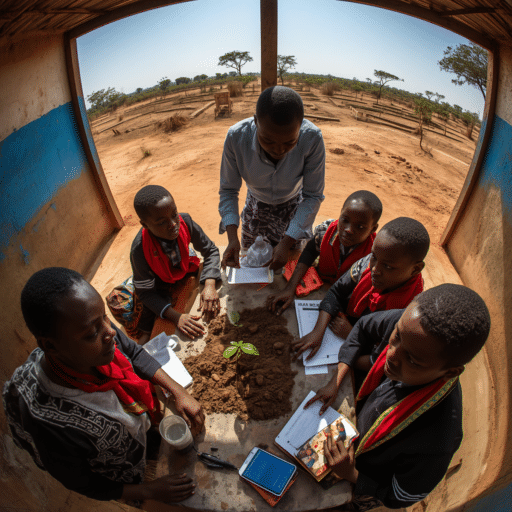
Communities affected by climate change should not be viewed only as people who need help. They also have knowledge that can contribute to solutions. Farmers understand changes in rainfall and growing seasons. Community members know where flooding occurs and where water becomes scarce. Young people understand those challenges that are affecting their generation. This knowledge should complement scientific research and inform climate adaptation. Schools can play an important role. Climate education should not stop at definitions of global warming or greenhouse gases. Students can learn about issues they see around them, including water conservation, sustainable agriculture, soil degradation, flooding, waste management and disaster preparedness. This can make climate education more practical and meaningful.
Protecting Education Must Be Part of Climate Action
For Northern Ghana, building climate resilience should mean more than protecting farms, roads and physical infrastructure. It should also mean protecting children’s opportunity to learn. Government, educators, development organisations and communities need to recognise the connection between environmental change, livelihoods and education. Climate adaptation programmes should involve local people and young people in identifying problems and developing solutions. The interest in sustainable agriculture has reinforced the belief that environmental challenges require practical and locally relevant responses. Through Passion Smart Sky Farms (IoTs), there is an interest in how technology and sustainable agricultural approaches can contribute to more resilient food systems. The challenges facing Northern Ghana are significant, but communities are not powerless.
Conclusion
If climate action is designed with communities rather than simply for them, it can do more than respond to environmental risks. It can create opportunities for young people to learn, participate, and contribute to solutions. Climate resilience should ultimately be about enabling communities to withstand environmental change while ensuring that the next generation still has the opportunity to learn, participate and thrive.

Comments are closed.