
Introduction
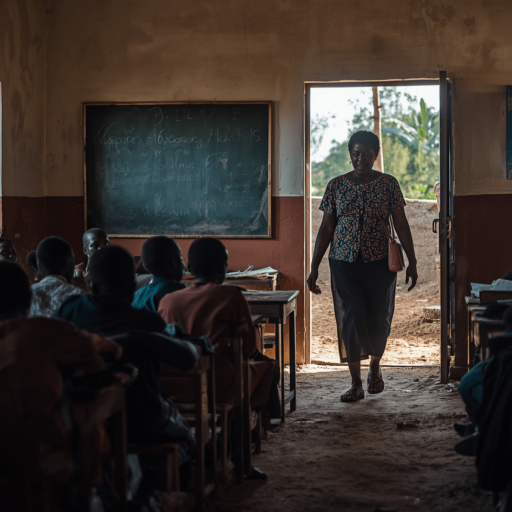
No banners, no sit-ins outside the ministry, no shocking headlines on the evening news. Yet every year, in hundreds of Malagasy villages, a classroom loses its teacher without anyone talking about it. With the September school year only starting, this silent exodus once again threatens to leave thousands of rural children without anyone standing in front of the classroom.
An Abandonment That Goes Unnamed
Unlike a traditional strike, this phenomenon is never officially declared. It is simply discovered one morning, when students find themselves waiting outside a locked classroom door. The “Teachers for All” report, published by UNICEF in 2024, documents deep geographical disparities in teacher deployment, with remote areas bearing the greatest burden of unequal staff distribution. The reasons are no mystery: inadequate housing, lack of electricity, limited access to health centres and salaries that are often paid late. Once assigned to remote areas, many teachers look for the first opportunity to transfer to the cities.
Numbers That Speak Louder Than Silence
The pupil-to-teacher ratio in public primary schools remains concerning. It stood at more than 50 pupils per teacher in 2009 and, despite a slight improvement to 43 to 1 in 2021 according to UNICEF, the national average conceals a striking gap between urban and rural schools, where some first-grade classes have as many as 49 pupils for a single teacher. To fill the gaps, the government relies heavily on community teachers, known as the “FRAM teachers”, who are recruited locally and often have no formal teaching qualifications. They are paid either by parents themselves or through irregular subsidies. The result is a two-tier system in which a child in the city of Toamasina and one in an isolated village do not have the same opportunities to access education.
The Price Paid by Children, Especially Girls
When teachers are absent, multigrade classrooms take over, with one adult responsible for several levels at once, or, worse, the classroom closes completely. School then becomes too far away and too uncertain, forcing families to make difficult choices. More often than not, girls are the ones who stay at home to take care of domestic and agricultural responsibilities, further deepening gender inequalities already documented by humanitarian organisations working on the ground, both in Fianarantsoa and in remote areas of the South.
Conclusion
As the September school year is here, one question remains: how many rural classrooms will be without teachers when the first bell rings? This strike that goes unnamed will probably never make the headlines. Yet it is silently shaping the future of an entire generation of Malagasy children and raising a question the country can no longer avoid: how long will urban schools and village schools remain two separate worlds?
Social Media: http://facebook.com/jeandelar.lava/

Comments are closed.