
Introduction
We’ve seen the beautiful images of sportsmen and women in traditional dress from various African countries, all taking part in the CAN 2023, which officially took place in Côte d’Ivoire. To everyone’s fascination, this melting pot of cultures never ceases to dazzle the web, sparking a growing buzz about fashion. So far, it’s been a great publicity stunt on the international stage for fabrics that promote African culture. Take a look at some of these fabrics and plunge into the world not just of fashion, but also of African culture.
Kente
Ghana’s national fabric, kente, is handmade and although it is accessible to everyone, in the past it was reserved for kings and the Ghanaian elite. Made up of several multicoloured strips sewn side by side, it is expensive when woven.
Kente fabric

Ndop
A traditional Cameroonian fabric made by assembling strips of cotton sewn edge to edge. This fabric is distinguished by its shimmering colours: purple, khaki, sky blue and turquoise. Like many other African countries, Cameroon also has other fabrics: Obom, Toghu, etc.

Ndop fabric
Kita
Originating in Côte d’Ivoire, this is one of the country’s most expensive fabrics. The combination of colours and patterns is infinite, and only the most experienced weavers know how to make it. It is far from being the only fabric in Côte d’Ivoire: Adinkra, Zoun fienko, Sénoufo, Bazin.
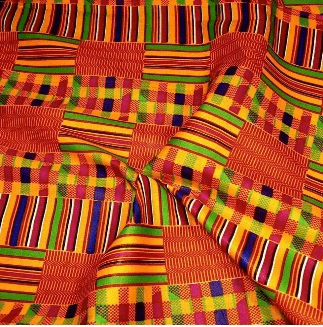
Kita fabric
Bogolan
Made in Mali, this dyed fabric is becoming increasingly famous for its sober colours and tribal motifs. Bogolan refers to both the fabric and a particular style of dyeing. The fabric is also widely used in Côte d’Ivoire, Burkina Faso, Senegal and Guinea.
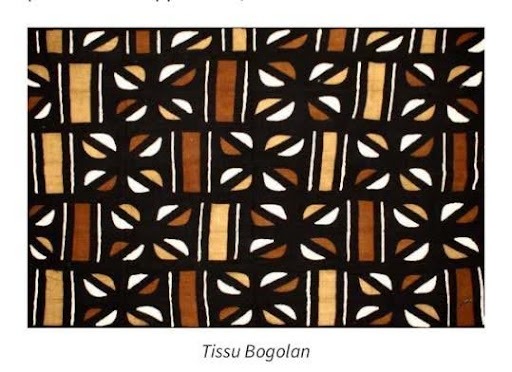
Africa being a small village, these fabrics are used in several countries on the continent, providing an incredible mix of cultures and textiles.
These African fabrics never go unnoticed. They are worn everywhere and for every occasion. In the morning, during the day and in the evening, at official events, prestigious celebrations, mourning ceremonies, etc., they are valued and showcased.
This value clearly illustrates Edouard Herriot’s quote: Culture is what remains in man when he has forgotten everything.
Conclusion
More than ever before, Africans are taking pride in their traditional garments, which are tinged with artistic flair, highlighting their fabrics, their cultures, and the history of each length of fabric.
Whether in fashion, interior decoration, or beauty accessories, African loincloths are gradually making a name for themselves in the fashion industry.
The exponential rise in the use of social networks has revolutionised fashion and art in Africa and around the world.
African creations are now being shared everywhere, in record time.
