

A cover letter, also known as an application letter, is a three to four-paragraph message directed to an employer by an applicant. It details the interest in the position, the company, and how the applicant would tailor the applied position. In this modern error, a cover letter is a substitute for a cover page, which employers ignore.
Like salt and pepper, a CV must be accompanied by a cover letter; it shows professionalism and determination for the position. The significant fixtures that an applicant needs to outline are the qualifications for the job by outlining the applicant’s experience, accomplishments, and skills.
Contrary to a resume, a cover letter allows you to go into further detail about your professional experience and discuss why you’d be a good fit for the position and business. Writing a cover letter after constructing your resume is advisable because it gives you an idea of what to write on a cover letter.
THE SIGNIFICANCE OF A COVER LETTER
A cover letter aims to acquaint applicants and prove themselves to a potential employer that they are more than simply a CV or resume. A cover letter gives the candidate a chance to review career objectives and how the position the applicant is applying for will assist in advancing their career.
Susan Adams, a Forbes Magazine writer, implores applicants to connect with the recruiter on the first line of the cover letter. The applicants must review their letters thoroughly to avoid abbreviations and acronyms and apply more formal writing (Chicago style).
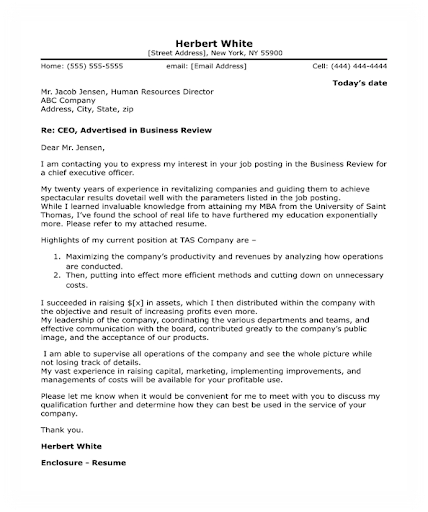 SIX WAYS TO DRAFT A GOOD COVER LETTER
- The header – As a standard formality, the cover letter will have to start with personal details, which makes it easy for the employer to content the applicant. The following must be included: Name, resident address, cell number, email, date, name of the recipient, their title, company name, and the address if available.
- Open with greeting – While still researching the company, seek the name of the employer or the recruiter. Use formal greetings such as “Dear [first and last name] or “Dear [position title], and avoid using “To whom it may concern” as it is unprofessional.
- In the opening paragraph– “first impression last”, the choice of words used must impress the employer, using punch verbs to enforce fascination with the applicant. The applicant must mention the position they are applying for, elaborate more about the position and the company to show interest, and that the applicant has done their homework.
- The body – The body paragraph focuses more on the concise description of the applicant’s experience concerning the job. Outlining the significant accomplishments, skills, and specialities that make them outstanding candidates for the position. It is vital to give evidence of the achievements of the position the applicant is currently in if still employed and the impacts they had.
- Closing paragraph – Give more detailed skills that set the candidate apart from other applicants that are relevant to the position. Indicate other awards and acknowledgements and give an anecdote for the employer to remember the application letter; if the implicant is changing careers, positions, and environment, this is the right paragraph to discuss.
- Then professionally sign off your cover letter – These are the last impression and the stamp of a cover letter. The applicant must highlight again how positively they would impact the company and show confidence in how the implicant achievements and skills had shaped them to cling to new possibilities and adapt to new environments. Link all skills and accomplishments, and set archivable goals and expectations. Do not forget to thank them and add your name.
In conclusion, always ensure your cover letter is concise, free from spelling errors, and proofread as often as possible to get the best write-up.
Interested in working with an International Company?
REdy Talent which is an affiliate of Right for Education Africa is offering various career opportunities on the global market to African prospects.
There is a plethora of career opportunities in:
1. Teaching
2. Hospitality
3. Engineering (Electrical, Chemical, Mechanical)
4. Renewable Energy
5. Health sector (nurses, doctors, pharmacists etc)
6. Marketers
7. IT professionals
8. Administrators and others
CLICK BELOW TO REGISTER NOW
https://www.redytalent.com/register_client.php
For assistance: email marian@rightforeducation.org
