
Introduction
Across Africa, solar power is becoming one of the most reliable and accessible energy sources. Many regions experience strong sunlight throughout the year, which makes solar energy a practical solution for homes, schools, clinics, and businesses. Understanding the science behind solar power helps explain why it performs so well on the continent and why it continues to grow as a clean energy option.
How Solar Panels Capture Sunlight
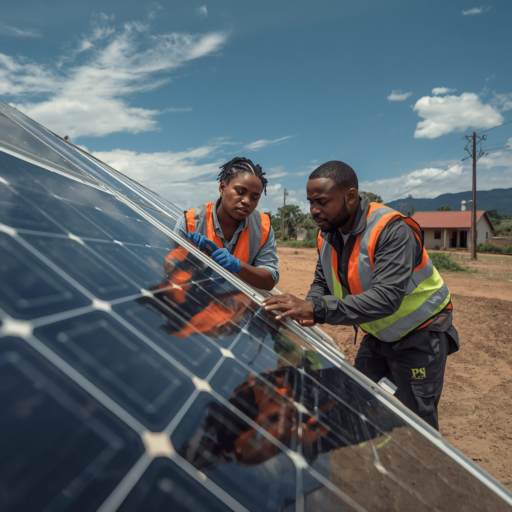
Solar panels are made up of photovoltaic cells. These cells are usually created from silicon, a material that releases electrons when exposed to sunlight. When sunlight, which is composed of energy particles called photons, hits the panel, these photons knock electrons loose, creating an electric current. This process is called the photovoltaic effect. Panels placed in open areas with direct sunlight produce more electricity because they receive stronger and more consistent light. Africa’s long sunny days and clear skies allow these panels to operate at high efficiency.
Why Solar Works Efficiently in Hot and Sunny Climates
Solar energy depends more on sunlight intensity than temperature. In many African regions, sunlight is strong even during cooler mornings, making energy production steady throughout the day. Some modern panels are designed with coatings that reduce heat-related energy loss. They also absorb light at different angles, meaning they still work during early mornings or late afternoons. This makes solar systems suitable for rural and urban communities where access to the grid is limited.
Turning Solar Energy into Useful Power
A single cell doesn’t produce much power, so dozens are connected to form a solar panel, and multiple panels are linked into an array. The electricity produced by solar panels is direct current (DC). This form of electricity generated is then channeled through an inverter, a crucial device that converts it into alternating current (AC), which is the standard form of electricity used to power homes, businesses, and the grid. Solar systems can also be paired with batteries, which store excess energy for use at night or during cloudy periods. This storage makes solar more reliable than many traditional power sources with frequent interruptions. It also supports remote areas that are far from national power lines.
Conclusion
Solar power works well in Africa because the continent has strong sunlight, open land for installation, and a growing demand for cleaner energy. The science behind solar technology is simple yet effective, allowing communities to generate their own power with minimal environmental impact.
Social Media: https://www.linkedin.com/in/samuelappaudanso

Comments are closed.