
Introduction
When people hear about Botswana, many immediately think of diamonds, wildlife safaris, and the vast beauty of the Okavango Delta or the Kalahari Desert. While these natural wonders are indeed remarkable, there is another equally important story about Botswana that often goes unnoticed: its quiet success in governance and stability.
Botswana: Africa’s Model of Stable Democracy and Responsible Leadership Since Independence
Since gaining independence from the United Kingdom in 1966, Botswana has built one of the most stable democracies in Africa. At a time when many newly independent African nations struggled with political instability, coups, and economic uncertainty, Botswana chose a different path; one built on strong institutions, the rule of law, and responsible leadership.
A key factor in this success was the vision of the country’s first president, Seretse Khama. His leadership laid the foundation for democratic governance, transparency, and prudent management of national resources. Instead of allowing natural wealth to divide the nation, Botswana used its diamond resources, developed in partnership with De Beers, to invest in infrastructure, healthcare, and education.
Today, Botswana is often cited as one of Africa’s least corrupt countries and one of the continent’s strongest democracies. Elections are held regularly, the judiciary remains respected, and citizens enjoy a high level of political freedom compared to many parts of the world.
Cultural Traditions
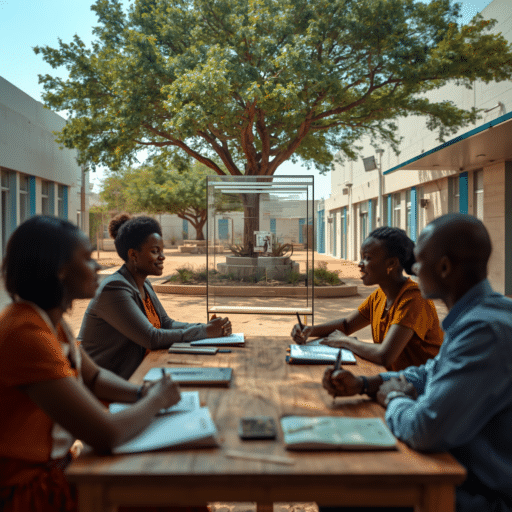
Another unique feature of Botswana’s governance lies in its cultural traditions. The concept of the Kgotla. A traditional community assembly where citizens gather to discuss issues openly with leaders. These continues to influence modern governance. At the Kgotla, everyone has the opportunity to speak, reinforcing the values of participation, accountability, and respect.
Botswana’s story challenges the common narrative that Africa struggles with governance. Instead, it offers a powerful example of how leadership, culture, and responsible management of resources can create long-term stability and development.
Challenges Faced
However, Botswana’s journey is not without challenges. Like many countries, it faces issues such as youth unemployment, economic diversification, and climate change. Yet the country’s history shows that progress is possible when institutions are strong and citizens remain engaged in shaping their nation’s future.
Conclusion
Botswana may be a small country in terms of population, but its example carries a big message: good governance matters. By investing in people, maintaining accountability, and respecting democratic values, nations can build a future that benefits generations to come. Sometimes the most powerful success stories are the quiet ones – and Botswana’s is one the world should know.

Comments are closed.